Change with storytelling
You will find over 10 years experience with storytelling in organizational change and communication on this site. The site is co-created and contains stories from customers and colleagues. They will show you what Stories of Change can do for your organization, your stakeholders and customers.
Stories are everywhere. Everyone shares them and tells them. It is the way in which we make sense of our life and work and how we share experiences, knowledge and seek explanations. Stories are also how we engage people to organizations. Those real, authentic stories, are also in your organization. If you are story sensitive you will hear them everywhere. You can use these stories to engage, make abstract information concrete and to understand the reality of your workforce. All you need to do is to take stories serious. Organizational stories come straight from the heart of the storyteller. That is why I call them “lived” stories. Like this one:
Peter Bakker, Chairman at TNT narrates:
My right foot
I am sorry to confess that it is my business to pollute. TNT has 30.000 polluting vehicles on the road, everyday hour of the day, every day of the week. Not to mention our airplanes…
I happen to have a Toyota Prius car, of course because I think it is the most attractive looking car on the road today. Great that it only uses 1 litre petrol to 30 kilometres. That is, when I am not in a hurry. When I am late for a meeting I drive much too fast and then the car uses no more and no less then any other ca on the road. That is what I want to say to you. It is actually all about this [steps away from the microphone and points at his right foot]. This foot, the behaviour.
We can talk CR – as we call it at TNT, because we think being sustainable is not just social – untill we are blue in the face. And we all know what we should be doing, but do we do it? Does our personnel do it? It is only when we can change our behaviour that we can achieve a better world.
With that right foot…
This story was told at an ESAA conference, September 2010 on measuring the impact of CSR.
Peters story confirms, what I see in my daily practice when working in organizational change. That attitude and behaviour are critical to real change. It is the way forward as Menno van Doorn and Robert Stoffels write in the Banking Review, September 2010: Management, Stop the growth flow, instead incentify behaviour. Behaviour as part of the organizational culture is what distinguishes one organization from another. What makes one company more successful then another because works and it cannot be copied!
Another example from the CSR front:
A corporate communication manager narrates:
Not our core business…
For us, as a multinational Diversity & Inclusion, is extremely important. At several places in the world we employ special officers, responsible for creating and maintaining a multicultural and socially diverse workforce. I find it an exciting but also nerve wrecking subject to work in from a communication perspective. Its not always easy but clearly such a subject is talked about extensively. We recently had a group of people together responsible for communicating D&I. We got some guy from Switzerland in to inform us on the subject. Fantastic story, knowledgeable man, yes, he is white but senior!-. He tolds us all about the consequences of D&I but after listening for a while I had had it! He showed all kinds of models and statistics and what we have to do, from his point of view. Such a consultant does not any apprehension that Diversity & Inclusion is not our core business. We are here to make money, get our targets, preferably in a pleasant manner. No way can we spend all our time on this one issue…
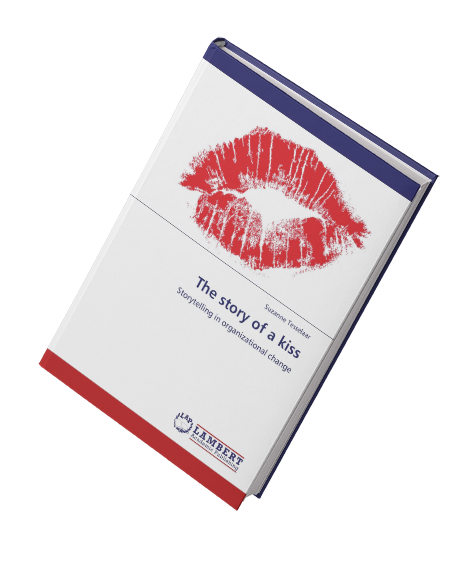
These are the type of stories with which Suzanne Tesselaar advises organizations in change. The story shows that trying to changing organizations needs to be instigated from inside. Sometimes it is necessary to bring in an expert but connections and engagement come from within. And that is how Suzanne works with organizations, for a limited, appointed, periode.
Seeking connection with the vision, targets and the history of the organization. That is how structural changes in organizational culture, attitude and behaviour take place. Change is a co-creation between management, HR and/or communication departments. This process is where Suzanne acts as a transaltor and advisor to management, HRM- and/or corporate communication departments. And this is how the process of change becomes a co-creation. This approach lead to committment and engagement in the organization.